Reviewing USA Army T-shirt Design 23 for Real Embroidery
As a designer who spends more time under the hoop than outside of it, I approach every new digital embroidery file with a mix of excitement and skepticism. We have all been there: you buy a design based on a flashy thumbnail, only to find out later that the stitch density is a nightmare or the details vanish on textured fabric. Today, I am taking a close look at USA Army T-shirt Design 23. This isn't just a quick glance at a preview image; this is an evaluation of how this specific graphic holds up when translated from a screen to a physical handmade product.
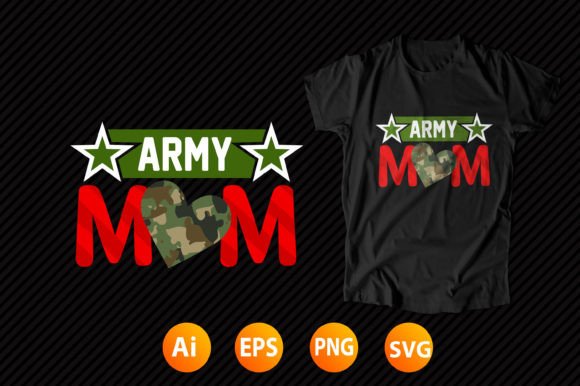
The product description highlights that this is a typography-focused piece featuring "Army Mom" themes, marketed heavily toward T-Shirt Designs and general Graphics. However, as embroidery professionals, we know that a vector shape meant for print does not always translate perfectly to thread without some strategic thinking. Let's break down whether this asset belongs in your commercial library or if it needs some serious tweaking before it hits the hoop.
First Impressions and Visual Personality
When I first pulled up the files for USA Army T-shirt Design 23, the immediate takeaway was its bold, patriotic mood. The layout relies heavily on strong typography, which is excellent for making a statement. In the world of custom apparel, text-heavy designs often outperform complex illustrations because they are readable from a distance. The "Army Mom" theme carries an emotional weight that resonates deeply with a specific customer base, making it a prime candidate for personalized gifts or boutique merchandise.
Visually, the design feels structured and clean. The description notes "100 vector shapes re-sizable," which suggests a high degree of flexibility. For an embroiderer, this is a double-edged sword. While scalability is fantastic for adapting the design to different hoop sizes, it also means the responsibility falls on you to ensure the proportions remain balanced when resized. If you shrink it too much for a baby onesie, those crisp lines might turn into a muddy blob of thread. If you enlarge it for a back-of-shirt placement, you need to ensure the internal spacing doesn't become awkwardly wide.
Real-World Application: The Sweatshirt Test
To truly gauge the value of USA Army T-shirt Design 23, I imagined a specific real-life scenario: a custom order for a local military support group needing matching sweatshirt embroidery for an upcoming homecoming event. The client wanted something dignified yet proud, suitable for adult women.
In this context, the design shines. Placed on the left chest of a heavyweight cotton blend sweatshirt, the typography offers a professional look. Unlike a satin stitch logo that might pucker on thick seams, a well-digitized text design can sit flat and clean. However, since this product is sold primarily as a graphic or vector set, you must ensure your digitizing software converts those shapes into appropriate stitch types. You would likely want to use a fill stitch for larger letters to give them body and a running stitch for finer outlines to maintain clarity.
If you are an Etsy seller looking to expand your holiday catalog, this design fits perfectly into the holiday embroidery niche, particularly for Veterans Day or Memorial Day collections. It transforms a standard garment into a meaningful tribute. The key here is thread selection. Sticking to classic reds, whites, and blues ensures the design pops against navy or heather grey fabrics, maximizing the visual appeal and ensuring the message is unmistakable.
Navigating Fabric Challenges and Stitch Density
While the design concept is strong, practical application requires caution. The description mentions the item is "Easy," but in embroidery, "easy" is relative to the material. If you plan to use USA Army T-shirt Design 23 on a tote bag design made of canvas, you will need a heavy-duty stabilizer to prevent the fabric from pulling under the weight of the thread. Canvas has a rough fabric texture that can swallow small details, so checking the stitch density is crucial. Too dense, and the fabric distorts; too light, and the backing shows through.
Conversely, applying this to stretchy knits or thin performance teats requires a different approach. The sharp corners often found in military-style typography can be problematic on stretchy fabrics. Without proper stabilization, these points may curl or break after a few washes. For baby embroidery projects, where softness is paramount, you might need to manually adjust the file to reduce density or switch to an applique design method, using fabric instead of heavy thread fill to create the shapes. This reduces stiffness against sensitive skin while maintaining the visual impact.
Furthermore, consider curved surfaces like caps. While the design is versatile, placing a wide typographic layout on the front panel of a baseball cap can be tricky. The curvature might distort the straight lines of the text, making it look warped. In such cases, it is often better to reserve this design for flat surfaces like aprons, pillow covers, or tea towels, where the geometry remains true.
Commercial Viability and Brand Consistency
For craft business owners and creative entrepreneurs, the bottom line is whether a design sells. USA Army T-shirt Design 23 has high potential for commercial embroidery projects because it targets a passionate niche. Military families are loyal customers who value quality representation. A sloppy stitch job can damage your reputation, but a crisp, well-executed version of this design builds customer trust and encourages repeat business.
When creating printable mockup images for your online shop, this graphic offers excellent versatility. Because it is described as "100 Print ready," you can easily generate digital previews to test color combinations before committing to thread. This saves money on wasted materials and helps you curate a cohesive brand aesthetic. Whether you are selling the finished product or offering customization services, the professionalism of the final output depends on how well you manage the transition from vector to thread.
Essential Designer Notes Before You Stitch
Before you load this into your machine, there are several practical steps every professional should take. First, always test the design on scrap fabric that matches your final project material. This reveals issues with thread colors contrasting poorly against dark fabrics or tension problems that aren't visible on the screen.
- Check Licensing: The product description does not explicitly detail commercial licensing terms. Always confirm with the seller whether you are allowed to sell physical items made with this design or if it is for personal use only.
- Verify File Formats: Ensure the download includes the specific embroidery file formats compatible with your machine (e.g., PES, DST, EXP). If only vector files are provided, you will need to digitize it yourself.
- Inspect Small Details: Zoom in on the corners of the letters. Tiny, intricate serifs might need to be simplified to prevent thread breaks.
- Stabilizer Selection: Match your stabilizer to the fabric weight. A cut-away stabilizer is usually safer for garments that will undergo frequent washing, ensuring the design lasts as long as the shirt.
In conclusion, USA Army T-shirt Design 23 is a promising asset for designers willing to put in the preparatory work. It captures a powerful sentiment and offers a clean layout that works well across various small shop products. However, its success relies entirely on the skill of the operator to adapt the graphic nature of the source file into a robust, stitch-ready reality. With careful attention to fabric choice, stabilization, and digitizing adjustments, this design can become a staple in your portfolio of design assets, delivering high-quality results that honor the subject matter with the professionalism it deserves.